Last week, I got a teeny, tiny taste of being a graduate student. The core of Landyn’s latest class, Natural Resource Management- Field Course, was a week-long field trip through the Osa Peninsula. Not many tourists make it down to Osa since it’s the southernmost point of Costa Rica; it’s a 7-8 hour drive from San Jose and does not have its own large scale airport to accommodate travelers.

The university was gracious enough to allow me to attend the trip as well, making me an honorary U Peace student for the week. (P.s. I did raise my hand and contribute to critical discussions on numerous occasions…when I play the part I fully commit)
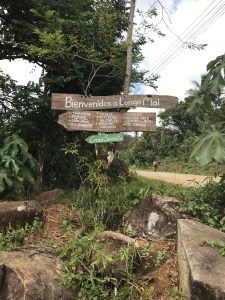
We stayed at 3 different locations during the trip: a community called Longo Mai, an indigenous community called Bribri, and an eco-lodge named La Tarde.
First Stop: Longo Mai
For some background: Longo Mai first started in Europe in the late sixties, founding communities based on progressive ideals and a cooperative social structure.
They tried to replicate this in Costa Rica, taking in refugees fleeing from the civil wars in El Salvador and Nicaragua throughout the seventies and eighties. But the clashing of various Central American cultures proved that the cooperative society was not in their best interest– it just didn’t work. However they did not inform us of this before our arrival.
So we thought we were going to experience a super rad hippie village that is entirely self-sufficient, but rather it was just a cluster of houses on a huge, fenced-in chunk of land; a community of individuals brought to this property under the same pretenses, but entirely independent of one another.
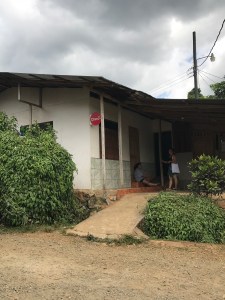
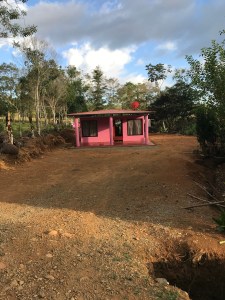
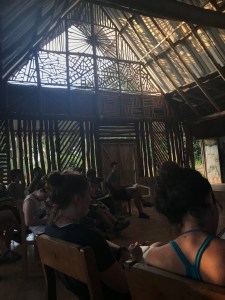
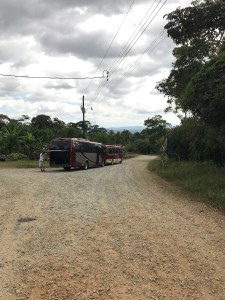
Us students were split up into two’s and handed out to host families like free hot chocolate at a night-time fundraising walk. Excited yet still cautious.
Our host mother wanted nothing to do with us (“us” being Landyn and I, thankfully we did not have to split up in this place since I was still very unsure how I felt about it); she asked us if we were ready to eat whenever we walked in the door, gave us a plate of food, and then immediately went back to the television. To be fair, the telenovela she watched did sound rather intriguing. We slept in what appeared to be a garage: concrete flooring and walls, tin roof, ceiling absent.
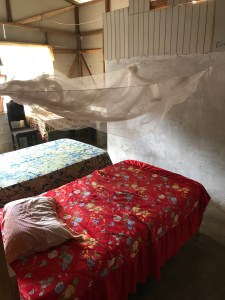
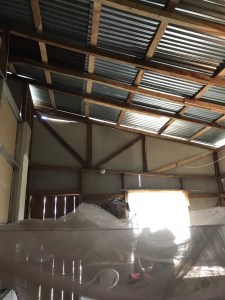
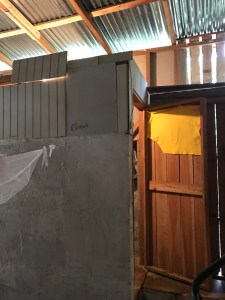
A few Longo Mai representatives showed us around the community and we ended up on the porch of a woman named Guadalupe. She was the closest we came to feeling hippie vibes; after beating cancer FOUR times she gave up all household products that she herself did not make. From cleaners to soap to shampoo, she began producing everything herself and invested hundreds of hours into researching which plants are best for said products, what plants naturally heal common ailments, and then subsequently building her own medicinal garden. She’s kind of my spirit animal.
It was, sadly, extremely relatable and a little mind-boggling that someone in a different country also feels the effects of corporations poisoning their patrons with harmful chemicals and continued use of proven cancer-causing agents in their products. I’m so envious that she has the land and resources to be able to become completely self-sufficient and no longer rely on these terrible companies.
In keeping with this tone, we toured around the farmlands of Longo Mai where they grow produce such as bananas, cacao fruit, and sugar cane. They told us about how they have to frequently fend off developers from turning their land into a pineapple plantation– a task not easily managed.
The next day we visited a nearby organization, run by the son of the owner of Longo Mai, that aims to teach the community about permaculture and restore forests depleted by reckless agricultural practices (or those damn corporations). Their main objective is to prove, and perpetually improve, sustainable alternative methods to traditional agriculture.
Overall impression: Longo Mai was loaded with great information and I learned a ton about topics I didn’t even know existed, but it was more than a little strange that they could not provide answers to some of our questions. Namely, where is the money coming from, where exactly does it go, how can the inhabitants own their house but not the land the house is built on (allegedly a European organization owns the land), and how the land gets divided up. It was an awesome idea in theory, and it’s a fantastic long-term relocation option for refugees, but there appear to be few checks and balances on the man in charge.

Next Stop: Bribri
**Quick disclaimer: the following section does not represent the entire indigenous community of Bribri, just my personal experience as a passing visitor. I have deep respect for all indigenous peoples, and wish I had the opportunity to speak with more everyday members of the community, not just two representatives**
After a quick 24 hours in Longo Mai, we drove a couple hours south to reach the indigenous community of the Bribri people.


We seemed to be welcomed in with open arms; there were two men doing most of the talking during our welcome lecture, but they did bring a woman who spoke only when asked to, about a women’s empowerment group that she had started in the community. There was kind of a weird vibe amongst the three of them, but the men went on to stress the importance of women to Bribri culture, and their belief that the earth, oceans, and stars are all women. So I kind of ignored that strangeness that set off my spidey-senses, and embraced the pro-women, feminist ideas they presented.
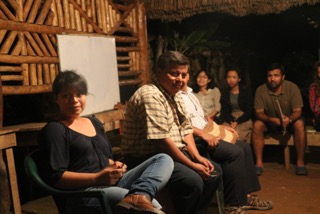
The next morning, we got up and hiked through the mountains to where they grow their crops.


After our fun, adventurous morning, I was exhausted. We all felt exhausted. But we rallied for our afternoon walk through the medicinal garden. I was genuinely interested in what they had to show us and the information they would provide.
I was mislead, it was one hundred percent false advertising, folks. There was no garden, they took us on a walk through a small patch of woods on the property and explained the Bribri cosmovision to us. This is really where things started to go south.
First issue: turns out they are not feminists. Our guide, one of the same dudes from the welcome lecture the night before, showed us a woman mashing corn between two rocks, a practice that allegedly happens all the time, and proceeded to tell us how a woman’s place is in the kitchen. He tried to spin it, of course, like any good PR-conscious man would, by throwing in terms like “sacred” and “crucial.” Also, in Bribri culture, a woman isn’t ready to get married until she can mash the corn with the rock well enough to their standards. *cringe*
And the whole world was created by trampling a fat girl to death. Yeah. Yeah. I know.
AND THE WORST PART, YOU GUYS! Remember the prop woman mashing the corn on the rock? Well, a girl in our group tried to ask her a question as we started to walk away, and she told us she wasn’t allowed to speak to us. Disclaimer: things do get lost in translation, but this was a native speaker she said this to. Starting to feel uncomfortable yet?
Second issue: man, they hate the West. Which is all fine and chill, but it kind of gets awkward when talking to a group of Westerners. Homeboy was out for BLOOD when he began speaking about Christianity, referencing with such vitriol in his voice how our version of heaven is about nothing but gold, riches, and wealth (this was new news to me) whereas Bribri heaven is about nature and inner peace. He also came for our blonde haired, blue-eyed Jesus (have y’all ever seen a blonde Jesus???) by suggesting it’s not right that the only place you can access him is within the walls of a building. He also hated on the Bible. And blamed the West for machismo culture in the Bribri community. And for everything else wrong and bad in the world, essentially.
While I’m much more spiritual than religious, I cannot emphasize enough how supremely awkward, uncomfortable, and honestly infuriating this entire exchange was. This man made a bunch of snap judgments about an entire group of people based on what…his own personal opinions and biases? Not cool. Not cool for him to do it, not cool for you or me or anyone else to do it. I have a newfound respect for just how uncool it is.
By the time we left the next morning, I felt immense relief getting out of there. The vibes were weird.
Last Stop: La Tarde
La Tarde was our furthest south destination, taking us deeper into the Osa Peninsula.
On our way, we stopped at a beach on Golfo Dulce, the hottest natural water I have ever swam in. I guess I shouldn’t have been surprised, the heat in Osa was overwhelming and the humidity had me sweating as soon as I hit outside air. We were so far south that we could see Panama in the distance across the gulf.
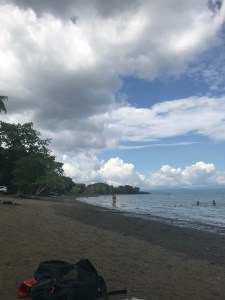
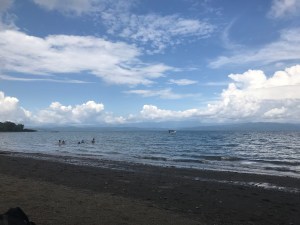
After the beach we got to La Tarde, by far our nicest, most beautiful homebase.
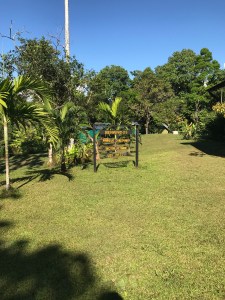
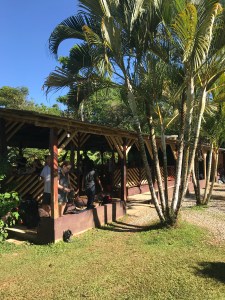
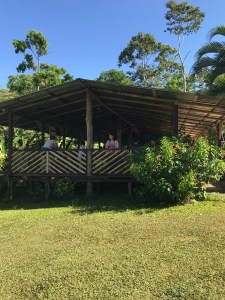
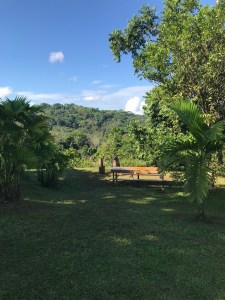
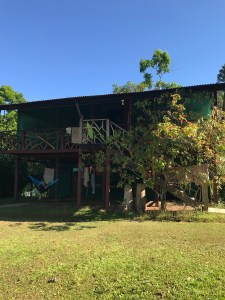
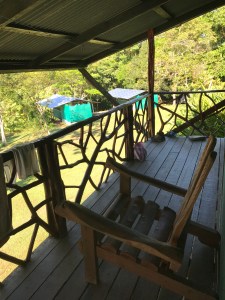
La Tarde is an eco-lodge that sits on the edge of the Corcovado National Park, and was started by a super cool guy named Eduardo. Eduardo spent 30 years illegally mining for gold in the park’s rivers, making hardly any income, and consequently resorted to killing protected animals inside the park so that his family could eat. He was not the man to go to for a lecture on conservation.
But one day he was approached by a hotel in the Osa area to run tours through the national park, and he quickly realized that that was where he had an opportunity to make money. So when he was done with his two-year contract, he came home and built every structure on the property himself. It’s beautiful, it’s successful, and now he advocates for conservation and protection of the wildlife in the area.
Another thing we did while staying at La Tarde was visit an incredible organization, Ascona, that fights to ensure the little land in Osa left unprotected by the government does not fall into the hands of careless developers ready to destroy precious ecosystems. There are dozens of species exclusive to Osa, so it’s incredibly important to protect these animals and their homes since you can’t find them anywhere else in the world. Ascona does vital, amazing work, so I strongly encourage you to learn more about them and find out how you can donate here. PSA students: they’ll build internships and volunteer opportunities for you as well!
We left Ascona feeling inspired by the work they do and how selfless they are (working for legitimately zero pay), and headed to the outlier stop of the entire trip: an exclusive luxury resort called Lapa Rios. All of their rooms are private bungalows with ocean views and the bidding starts at a cool $1,030 per night.
I was beyond excited. After five days of cold showers and sleeping in either a garage or open-air quarters I was thrilled at the prospect of even just standing in a beautiful lobby for a few minutes. I imagined the fancy conference room they would take us in to talk to us about their establishment’s sustainable practices and how they maintain their eco-lodge status (they’re ranked as one of National Geographic’s most unique lodges in the world).
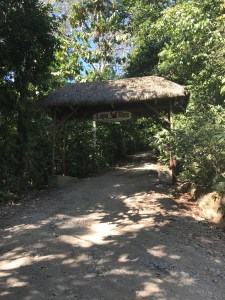
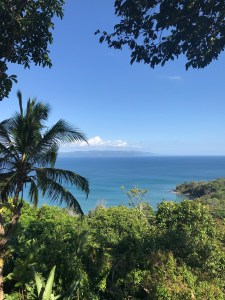
So here’s what actually happened:
We got to Lapa Rios and they made us wait in the parking lot. Fair enough, we were a little early so they were still getting things ready for us. But once we walked through the lobby out onto their incredible ocean-overlooking deck, the guests looked horrified. They stared at us like we were dirty street urchins sent to steal their children and destroy their lavish vacation. The waiters and waitresses had to rush to each table and explain what us common folk were doing there, and that everything would be okay because we’d be gone within a few hours. The staff was so sorry.
Then, the sustainability manager for the property, a very nice gentleman named Guillermo, took us to where he would be presenting his slideshow: the kitchen.
Legit, the kitchen. At one point a staff member started washing dishes next to me before getting shot dirty looks from Guillermo because, you know, they were trying not to call attention to the fact that they stowed the nasty peasants in the only place where the elite guests wouldn’t see us. And to think I pictured a gorgeous walnut conference table.
Between my own pride and dignity and the fact that the ice machine kept rattling around and scaring the crap out of me during his presentation, I really didn’t get much out of it. Lapa Rios was started by two people from Minnesota. That’s all I have for ya.
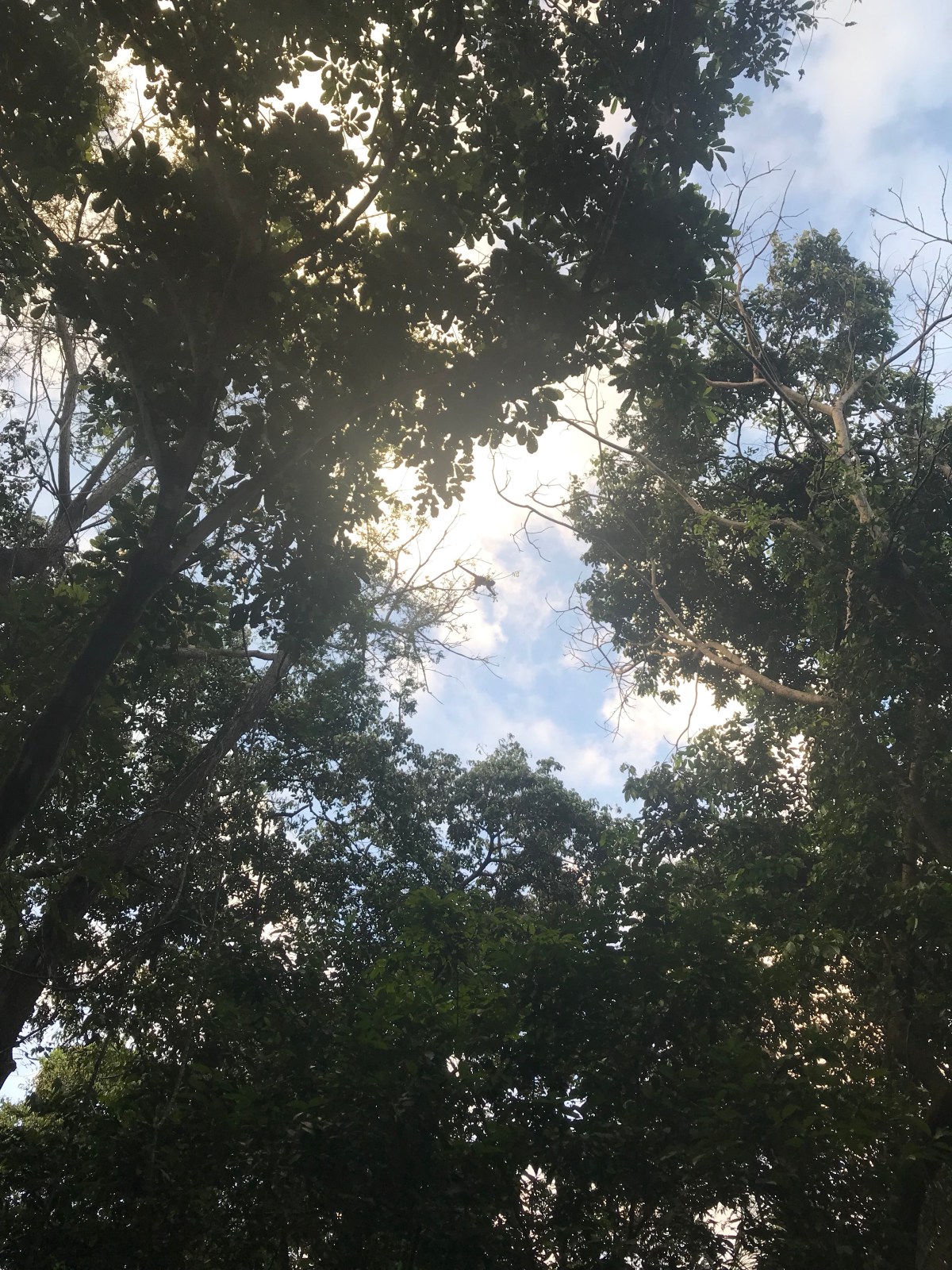
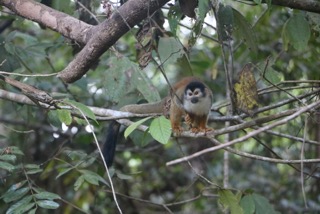
Despite all of this, the trip to Lapa Rios was very worthwhile. Background: Costa Rica holds roughly 5% of the entire world’s plant and animal species. The small Osa Peninsula holds HALF of Costa Rica’s biodiversity, so roughly 2.5% of the world’s biodiversity sits in this small area; henceforth, throughout our time in Osa we saw tons of different animals than we typically see in the Central Valley. We saw the greatest biodiversity specifically at Lapa Rios. We saw macaws, toucans, spider monkeys, squirrel monkeys (endemic to Osa), pigs, vultures, wild turkeys, and various plants unique to the region.
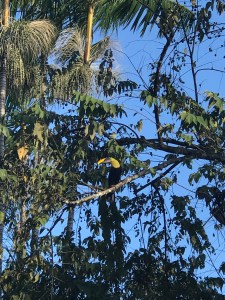
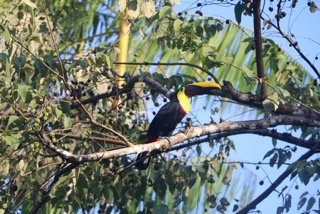
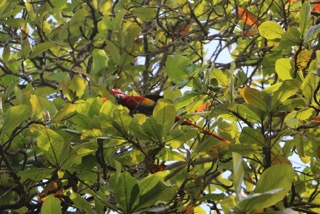
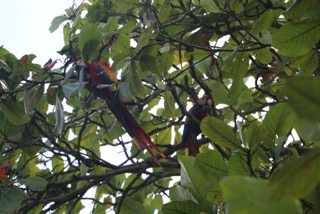
The monkeys at Lapa Rios were my favorite part. At one point, we were standing in their garden and dozens upon dozens of squirrel monkeys had us surrounded in the trees. Poor Guillermo was working so hard to keep us focused and engaged with him, but these were some of the cutest creatures I had ever seen, and cute pint-sized monkeys > garden plants.
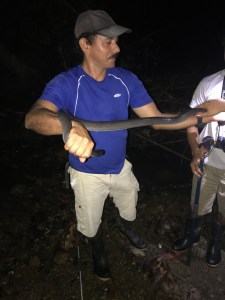
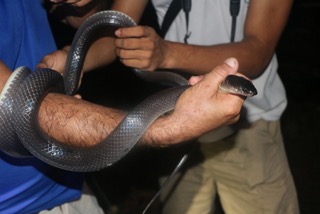
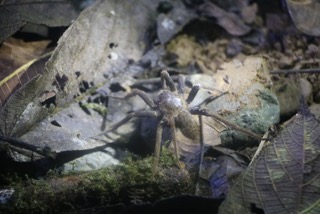
My least favorite part of the biodiversity sector of this trip was a night hike we went on near La Tarde, graciously led by the owner, Eduardo, himself, in which our sole purpose was so find venomous snakes residing by the nearby river. We saw four venomous snakes, and one beautiful, huge lad that was safe to touch. It was a one-and-done type of experience for me because as much as I enjoy walking through the jungle at night with no contingency plan if I did in fact get bit by one of our venomous, slithery friends, I’m not really in the market to feel that type of stress again.
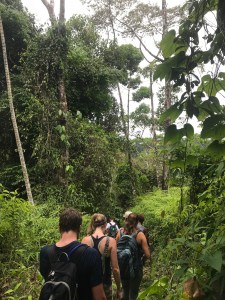
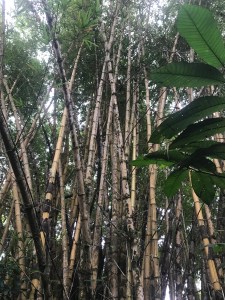
Our last day was rather awesome, albeit rather sweaty. We hiked 3 miles each way to a ranger’s station on the edge of the Corcovado National Park to hear about their conservation efforts. They delved into the challenges of being underfunded, understaffed, and overworked park rangers.


I really felt for them, right up until they said women aren’t allowed to be park rangers because they could never handle the isolated lifestyle, and, they could never go out into the park for days on end because they get periods. They legitimately said this, you guys. So yeah, strangely, I didn’t feel quite so bad for them anymore.
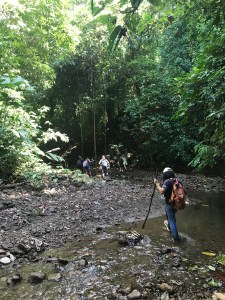
Regardless, the hike was awesome. On the way back to La Tarde, we decided to hike along the river which turned out to be a huge mistake for me. What started out as a nice, chill river with wide walking banks on either side turned into vaulting myself over fallen trees and climbing over, under, around massive boulders. I got my ankle stuck in a hole between rocks, slipped and fell, and failed to effectively climb up a boulder, sliding down into the cold, waist-deep water. Factor in the heat, humidity, and that all I had for lunch was a snack size bag of chips and we had all the makings for a super crabby Carebear. And that’s exactly what we got.
I had never been so eager to hop into an ice-cold shower.
That night, Eduardo threw us a huge going away party. They smoked a pig for hours before dinner, brought in a bunch of beer, and set up a lit-wedding-reception size sound system for dancing once it got dark.
La Tarde was the warmest welcome and most gracious goodbye we received from any of our host places.
So, Student Cari, What Did You Learn?
What a wild, obscure, unique week of my life.
I realized how complex communities can be. That might sound obvious to some, but I grew up just outside a subdivision in suburban Wisconsin. The most complicated thing I ever heard about was a tyrannical Home Owner’s Association.
But when communities are so small and fighting against huge corporations for rights to their own lands, life can be extremely difficult. Both at Longo Mai and Bribri the community representatives spoke at length about how the pineapple corporations perpetually poach their lands, itching to turn them the lush forests into profit plantations. They painted them to be textbook villains: they destroy the land, they use unsustainable practices, working conditions are terrible and pay is even worse. And I believe them.
And yet…members of both communities work at these corporations. Work options are extremely limited in their remote locations, So they end up working for the very people they despise.
And we were served pineapple repeatedly.
It’s confusing and horrifying and maddening that companies exploit people that they know don’t really have another means of income to do hard labor under terrible conditions for shit pay. I can’t imagine how it feels to know you’re selling out a little bit, going against what your community believes in, but knowing you have to put food on the table.
It’s such a universally relatable situation, too. It may be pineapple corporations here, but look at Monsanto in the U.S. [Enter any giant, soulless corporation in any given country here]
But what really weighed heaviest on my mind, what really had my emotional gauge all over the place was how marginalized and othered I felt during points of this journey.
Being judged, and downright attacked, for being a Westerner by the Bribri: rather infuriating.
Getting whisked back to the kitchen at Lapa Rios before the rich clientele had to look at us for long: total bullshit.
I’m white, middle-class, and grew up in Wisconsin…my privilege really shined through in that kitchen. I was madder than almost everyone else about that kind of treatment–it wasn’t right, it wasn’t fair, they invited us to come to their resort! It was a special kind of anger because it’s one of a very few number of times in my life that I’ve felt the weight of eyes in that way.
PSA: treating others like peasants does not make you royalty. It just makes you a turd.
Don’t be a turd.
Until next time, friends.
Special shoutout to another student, Tsubasa, for sharing some of these incredible pictures he took on the trip.
 Cari Anna Camera
Another great chapter in your journey. Thanks for sharing this with us. Aunt Linds
LikeLike